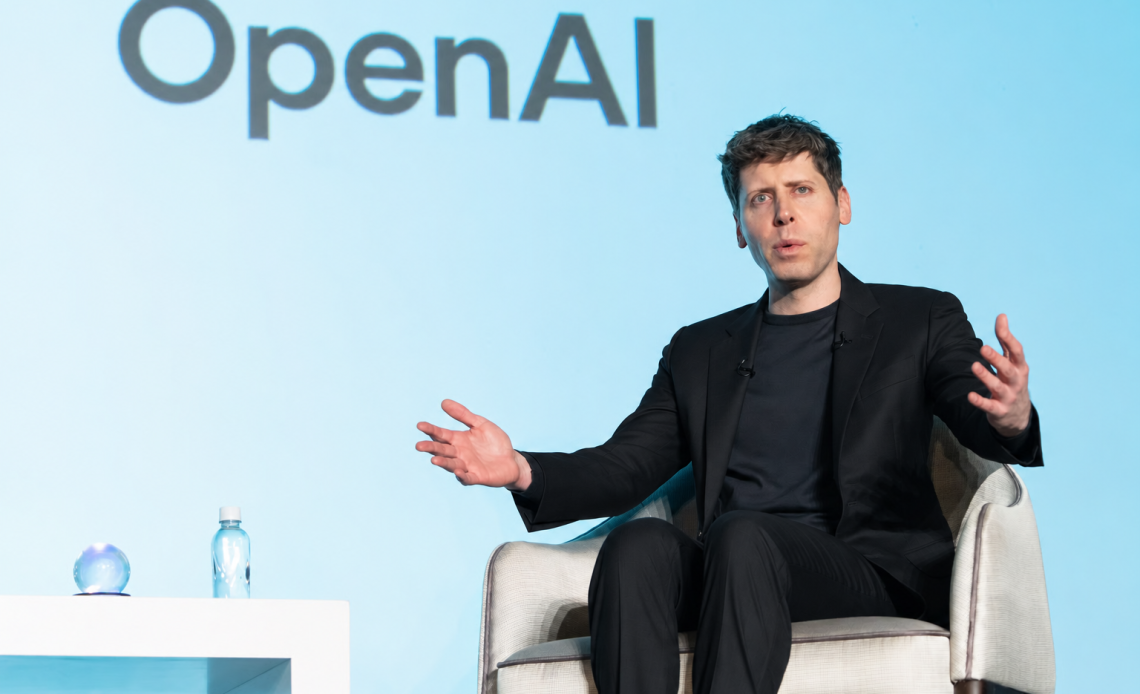
OpenAI has confirmed that it will comply with an executive order signed by US President Donald Trump that calls on artificial intelligence companies to allow the federal government to assess the capabilities of their AI models before they are released.
Speaking to CNBC’s Arjun Kharpal, George Osborne, OpenAI’s head of countries, said the company would sign up to the voluntary framework established by the order.
Osborne said government involvement in the oversight of artificial intelligence is necessary as the technology continues to evolve.
“It’s quite right that democratic governments have a big role to play in how this technology is used and deployed,” Osborne said.
OpenAI emphasises responsibility and safety
Osborne made the remarks on the sidelines of SXSW in London, where he discussed OpenAI’s approach to safety and government engagement.
According to Osborne, the company views its role and responsibilities seriously, particularly given the capabilities of its AI systems.
“As this leading frontier lab with these very, very powerful and capable AI models, and we don’t wait to be asked,” Osborne said, as cited in a CNBC report.
He added that OpenAI has sought to engage proactively with policymakers and regulators on issues related to AI governance.
“We proactively suggested ways that governments can keep a track on safety and security issues, not just in the US, but more broadly,” Osborne said.
His comments indicate that OpenAI supports government involvement in monitoring the development and deployment of advanced AI systems and believes such engagement should extend beyond the United States.
Executive order calls for pre-release access
The executive order, signed by Trump on Tuesday, requests access to AI models 30 days before they are released.
Under the framework outlined in the order, participating companies would take part in a benchmarking process aimed at evaluating the capabilities of advanced AI systems.
The process is intended to assess the advanced cyber capabilities of AI models and determine the threshold at which an AI model should be designated a covered frontier model.
The order seeks to establish a mechanism through which the federal government can review and assess advanced AI technologies before they reach the market.
Flexible regulation needed
Osborne, who served as the UK’s finance minister from 2010 to 2016, also discussed the broader regulatory challenges posed by artificial intelligence.
He said governments will need to approach regulation carefully as the technology continues to develop.
Governments are going to have to be smart over how they regulate the space, Osborne said.
He argued that regulatory institutions should be designed with both strength and adaptability in mind.
“What we suggest to governments is they create powerful regulatory bodies, but with a lot of flexibility into how they will operate in the future,” Osborne said.
His comments reflect OpenAI’s view that regulation should be capable of responding to rapid technological change while maintaining oversight of increasingly powerful AI systems
Jury rejects Musk’s claims against OpenAI
Meanwhile, a federal jury in California handed a decisive victory to OpenAI and its chief executive, Sam Altman, rejecting claims brought by Elon Musk that the company had abandoned its founding nonprofit mission and improperly benefited from its shift toward a for-profit structure.
The unanimous verdict, delivered by a federal jury in Oakland after less than two hours of deliberation, removes a significant legal hurdle for OpenAI as it pursues ambitious growth plans.
However, the closely watched case also exposed internal power struggles, scrutiny over OpenAI’s governance practices, questions surrounding Altman’s leadership, and broader concerns about AI safety, accountability, and the growing concentration of power among a small number of private AI companies.
Musk, who co-founded OpenAI in 2015 before departing the organisation, had sought approximately $150 billion in damages from OpenAI and Microsoft, arguing the funds should be directed to OpenAI’s nonprofit arm.
The post OpenAI commits to compliance with Trump’s AI review order appeared first on Invezz