
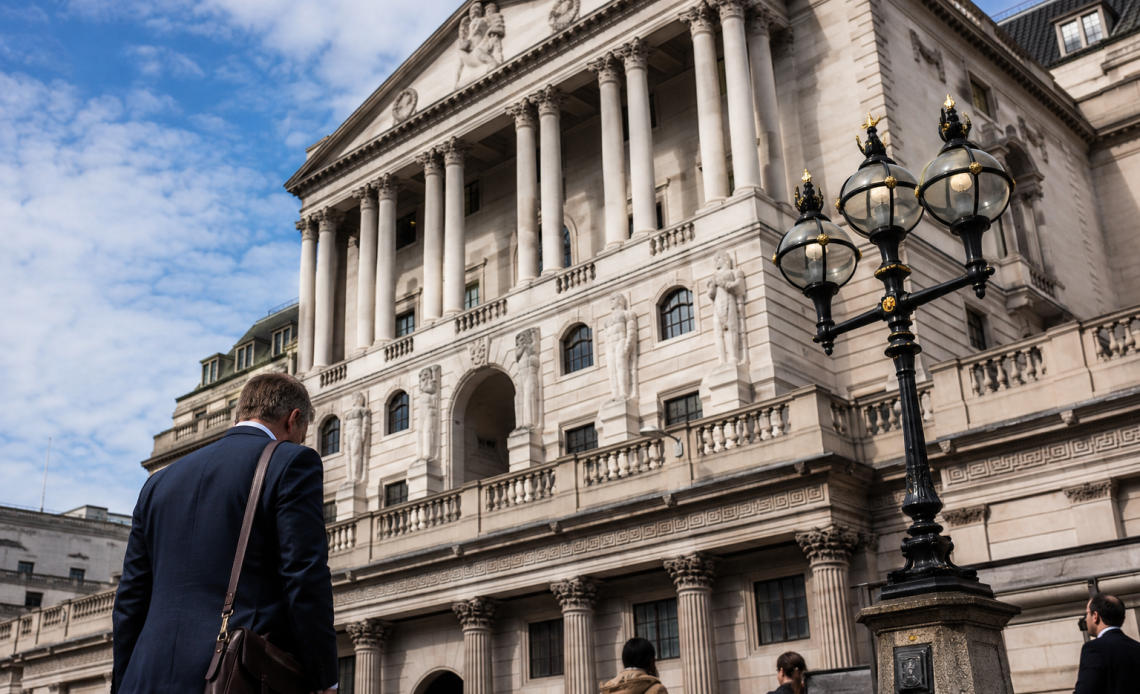
Bank of England Governor Andrew Bailey has signalled growing concern about public-sector wage growth as a potential source of inflation pressure, saying policymakers are paying closer attention as pay increases continue to outpace those in the private sector.
In remarks published by the Financial Times on Monday, Bailey said the widening gap between public- and private-sector pay growth could prompt the central bank to reassess how it evaluates wage-driven inflation risks.
Public-sector wages outpacing private sector
Historically, the Bank of England has focused more heavily on private-sector pay growth when assessing inflationary pressures.
Private-sector wages tend to respond more quickly to changing economic conditions and are generally considered more likely to translate into higher prices charged by businesses.
However, Bailey noted that recent trends have altered that dynamic.
“We have got more of a wedge opening up between private-sector pay and public-sector pay,” Bailey said in an interview transcript published by the Financial Times.
The divergence has persisted for an extended period.
For each of the past 12 months, public-sector pay excluding bonuses has increased at a faster annual rate than private-sector pay.
According to the figures cited, this marks the longest such run since 2021 and, before that, 2011.
Bailey suggested that the growing disparity could challenge some of the Bank’s traditional assumptions about wage growth and inflation.
Data for the first quarter of 2026 showed public-sector pay rising by 4.8% on an annual basis, compared with 3.0% growth in private-sector wages.
Bond market moves highlight fiscal discipline
Bailey also commented on recent movements in British government bond yields, which rose sharply and reached their highest levels since 2008 on the 10-year maturity most closely linked to the government’s borrowing costs.
Addressing speculation that the rise was linked to political uncertainty surrounding Prime Minister Keir Starmer, Bailey downplayed the impact of domestic political developments.
While dismissing politics as a major driver of the yield surge, Bailey said the market reaction underscored the importance of maintaining confidence in public finances.
The rise in UK yields exceeded increases seen in comparable US and German government bond markets, according to Bailey.
“People can take a message from the market at that point. The fiscal rules are important,” he said.
BoE remains cautious on interest-rate outlook
Bailey’s comments also touched on the outlook for monetary policy amid uncertainty surrounding the conflict involving Iran.
Speaking previously in Reykjavik on Friday, Bailey said the Bank of England could afford to adopt a wait-and-see approach while assessing whether the conflict would have implications for inflation and interest rates.
When asked whether a potential peace agreement could revive expectations for interest-rate cuts later this year, Bailey stressed that policymakers would need confidence that any resolution would endure.
His remarks suggest the central bank remains cautious about making policy adjustments while geopolitical risks continue to cloud the economic outlook.
For now, Bailey indicated that policymakers are closely monitoring wage developments, fiscal credibility, and international events as they assess the path for inflation and future interest-rate decisions.
The post BoE focuses on public-sector wage growth as inflation risk emerges appeared first on Invezz